
DBMK | 32-001: DH.103 Hornet F.Mk 3
Reviewed by Kevin Futter
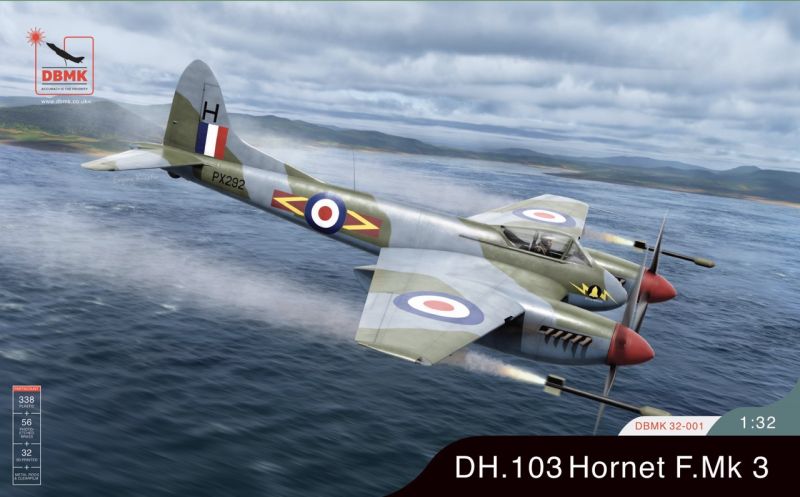
British company DBMK (or DBMK Model Kits) is a relatively new kit manufacturer that may already be familiar to many of you, having arrived on the scene with multiple kit announcements in multiple scales. Among these announcements was a much-anticipated new-tool, injection-moulded Hawker Sea Fury in 1/32 scale (whose release is imminent), and the subject of this review: a 1/32 scale injection-moulded de Havilland Hornet.
As a notional successor to World War Two's famous Mosquito, the Hornet shares a similar layout, and its ancestry is clearly evident. The kit itself utilises a short-run injection-moulding process, which is designed to produce only a small number of viable parts—hence this kit purportedly being limited to only 1250 examples. (By contrast, the Sea Fury kit is being manufactured using traditional "long-run" injection-moulding methods.) In practical terms, this means that the plastic is slightly softer than that found in kits produced using hardened steel moulds, things such as sprue attachment points (gates) are heavier, and most of the major parts lack the usual locating pins and corresponding holes.
That said, the limited-run manufacturing process is capable of producing excellent results, with outstanding detail and engineering, and this kit certainly bears that out. The box top states that it contains 388 plastic parts (though apparently this is an error, and it's actually closer to 200), 56 photo-etched parts, and 32 3D-printed parts. This latter element is a relatively recent development with regard to its inclusion in mainstream kits, having by now almost completed supplanted traditional resin detail parts, and it's great to see DBMK embrace its advantages right out of the gate.
The box also states that the kit contains metal rods and clear film, and while I located the latter, I couldn't find any metal rods. It's worth pointing out, however, that this review kit is a pre-production sample, and I would expect these metal rods would be included in the retail kit.
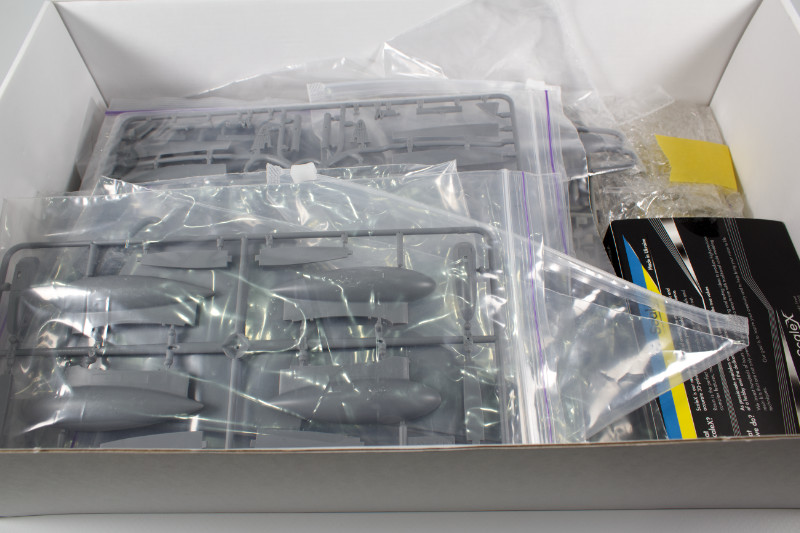
The Plastic Sprues
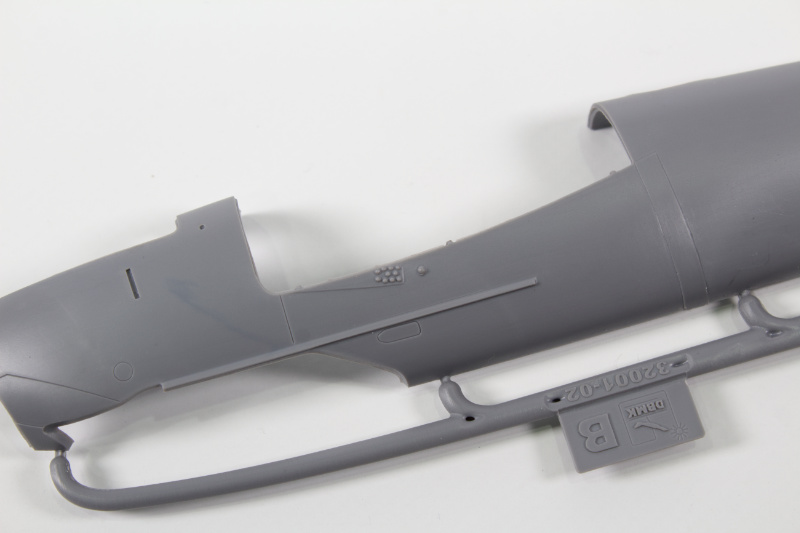
Most of the kit's 388 plastic parts are of the opaque grey variety, and are housed on 22 plastic frames. The fuselage and wing parts are each attached to a single runner.
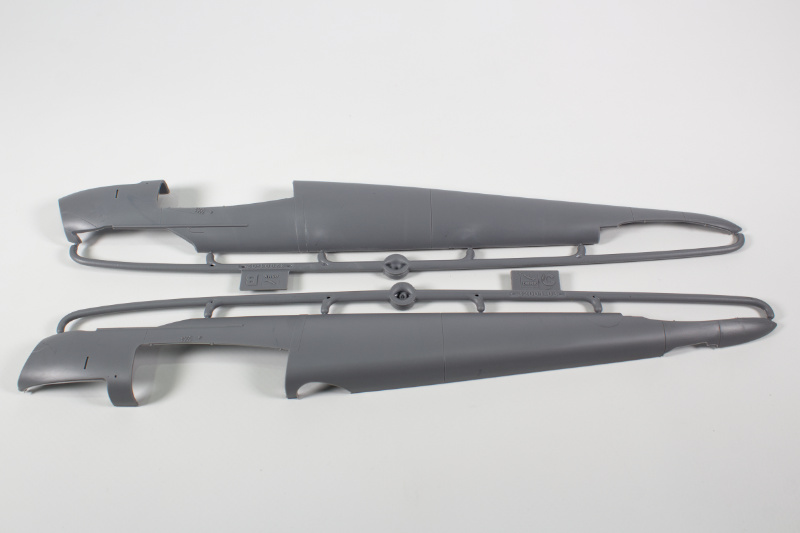
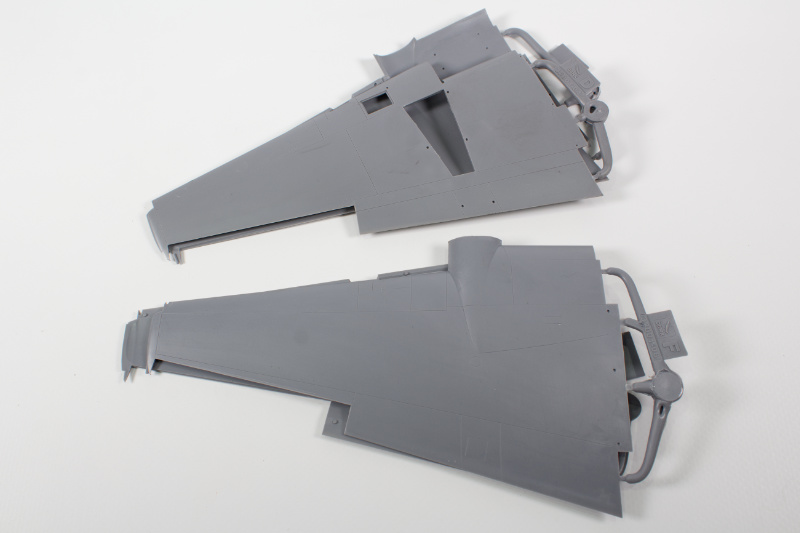
The inside of the fuselage halves are completely devoid on any interior detail, this of course being provided by the various plastic and 3D-printed detail parts.
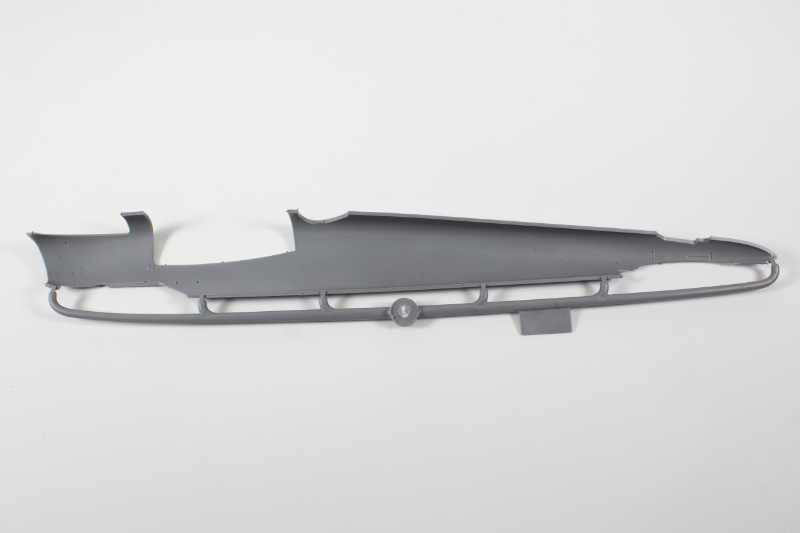
Exterior detail is precise and petite, though kept to an appropriate minimum due to the Hornet's mainly wooden construction.
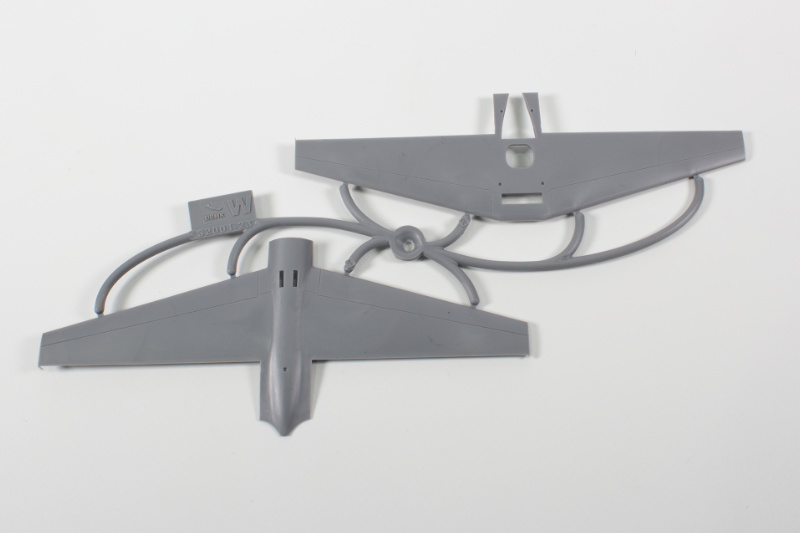
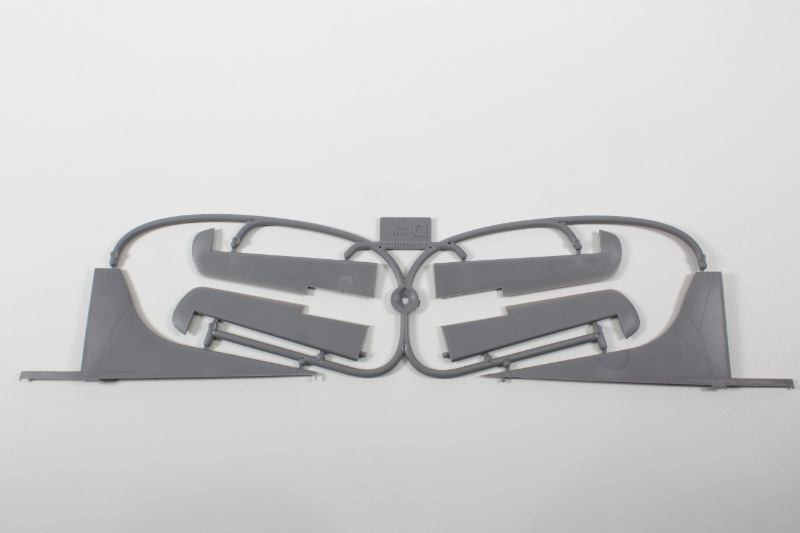
The tailplanes also have a funky little runner to themselves:
Elevators are separate parts, as are the fin, rudder, and aileron assemblies.
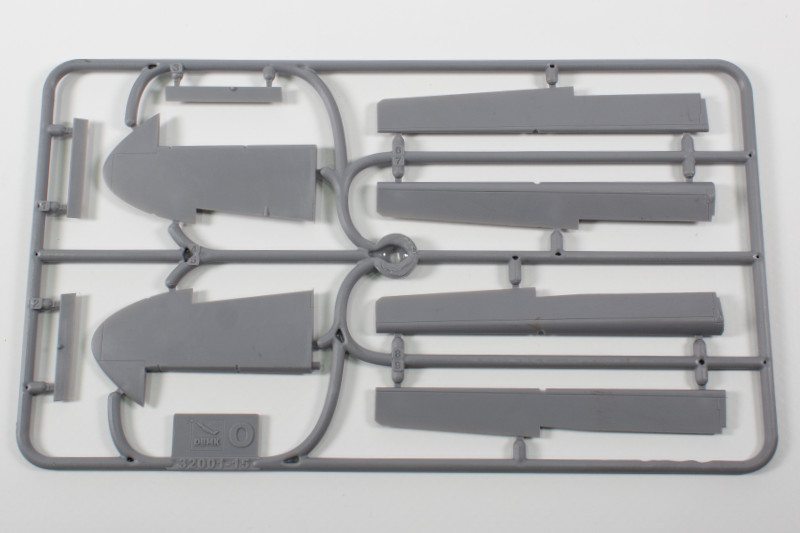
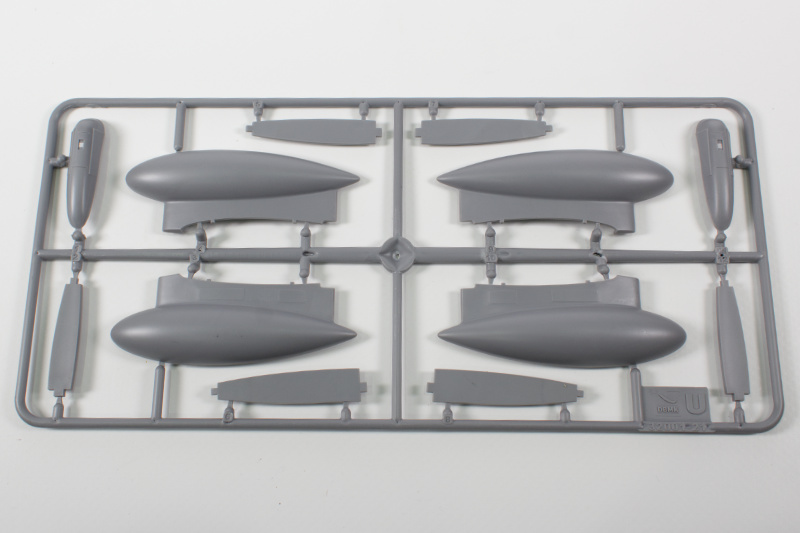
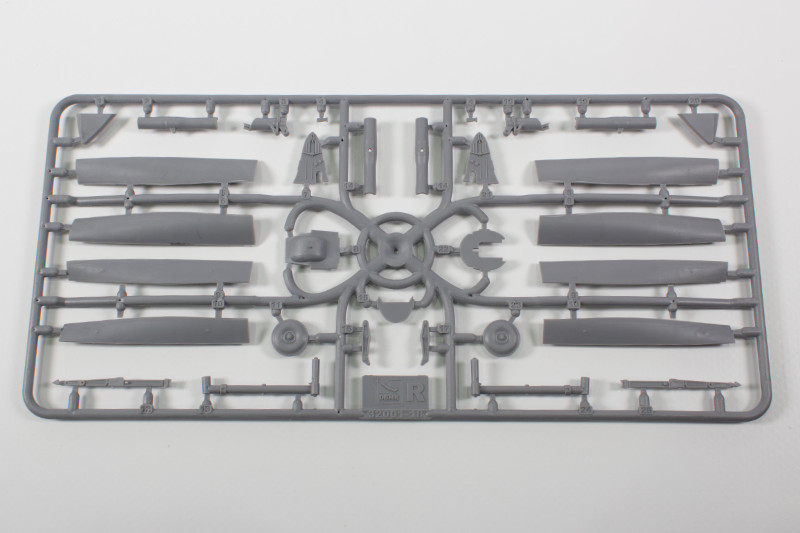
The rest of the plastic parts comprise the engine nacelles, nose parts, various internal structures, and stores.
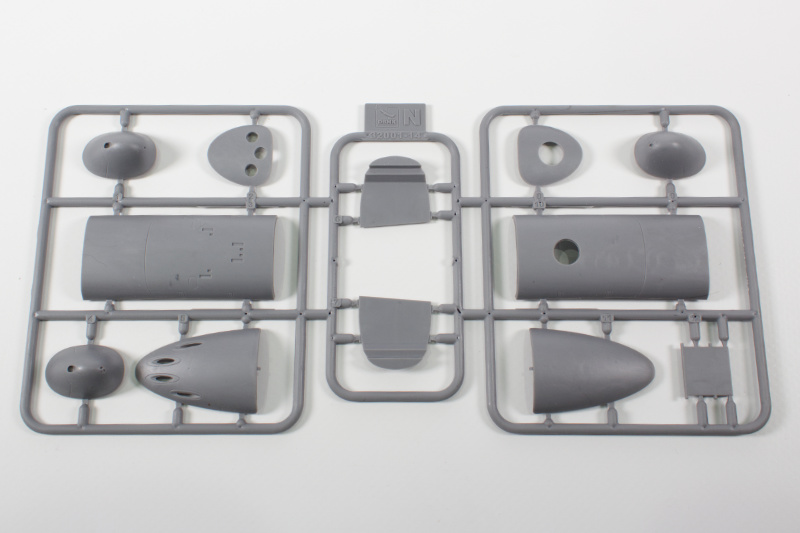
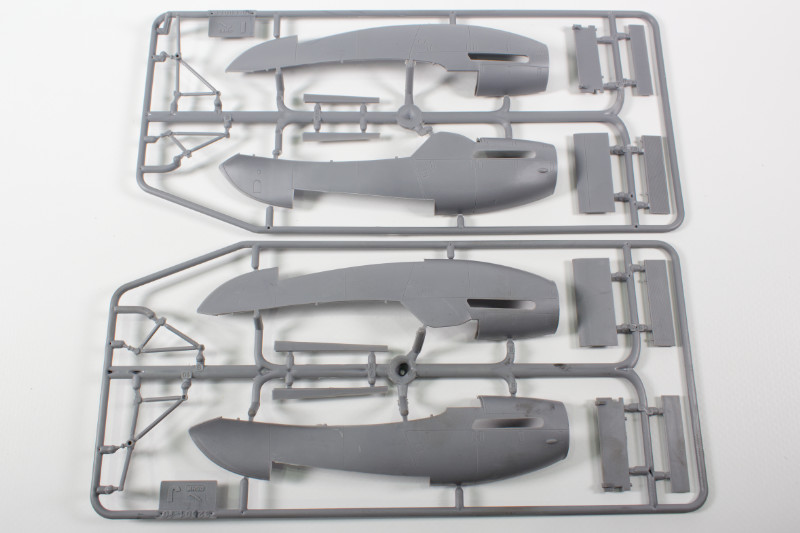
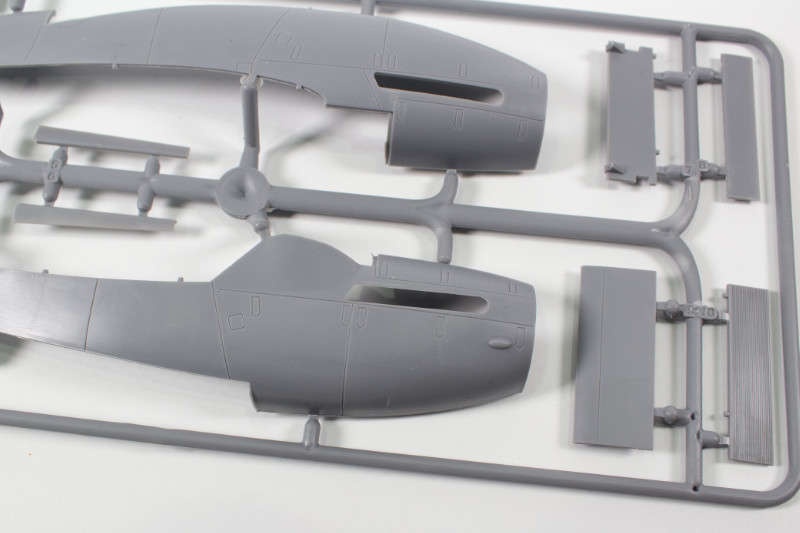
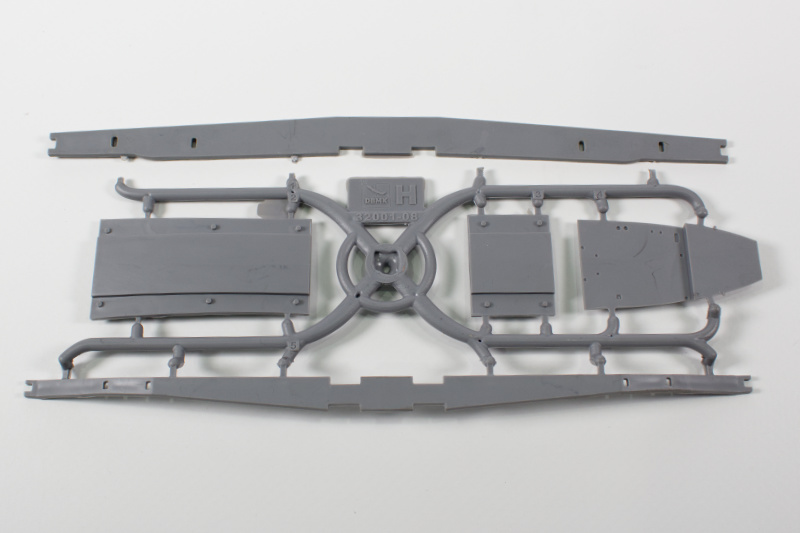
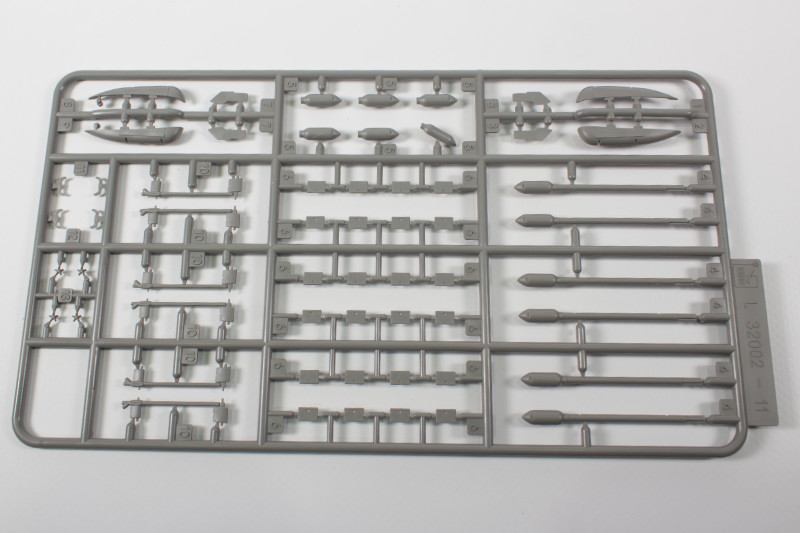
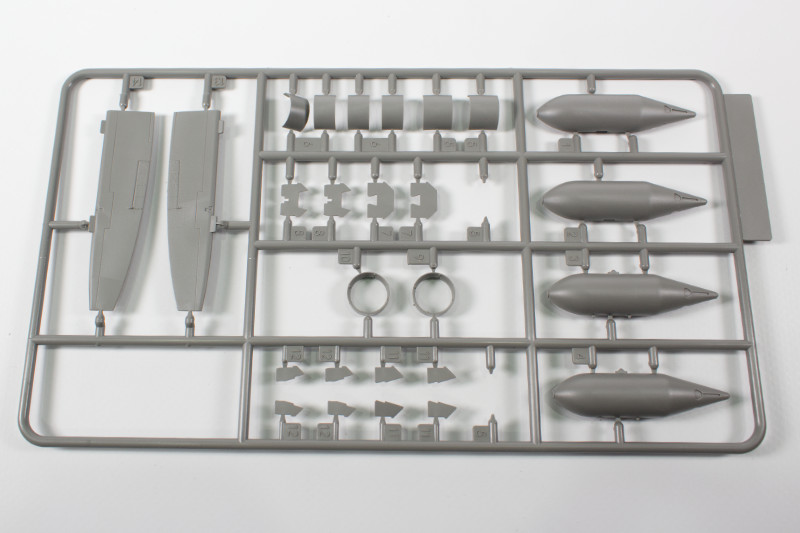
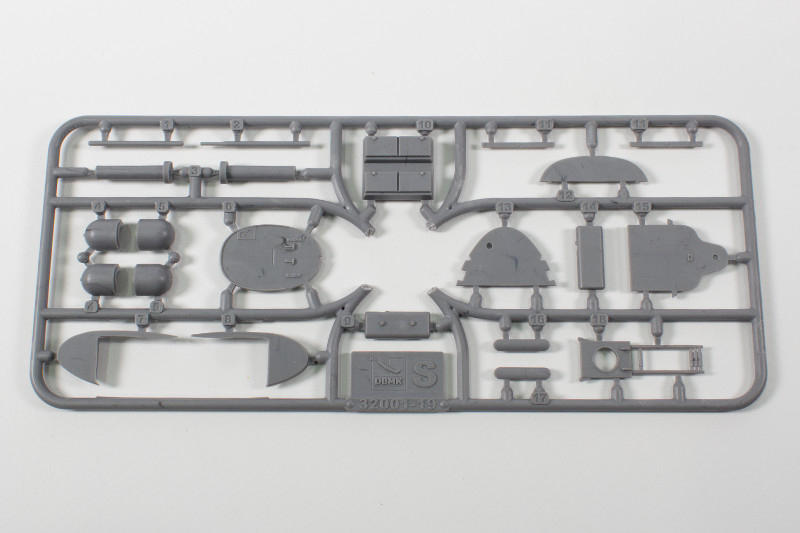
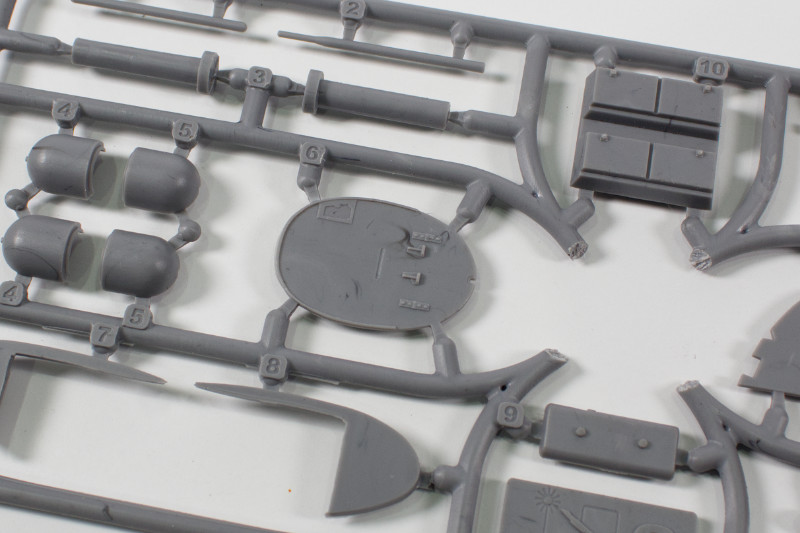
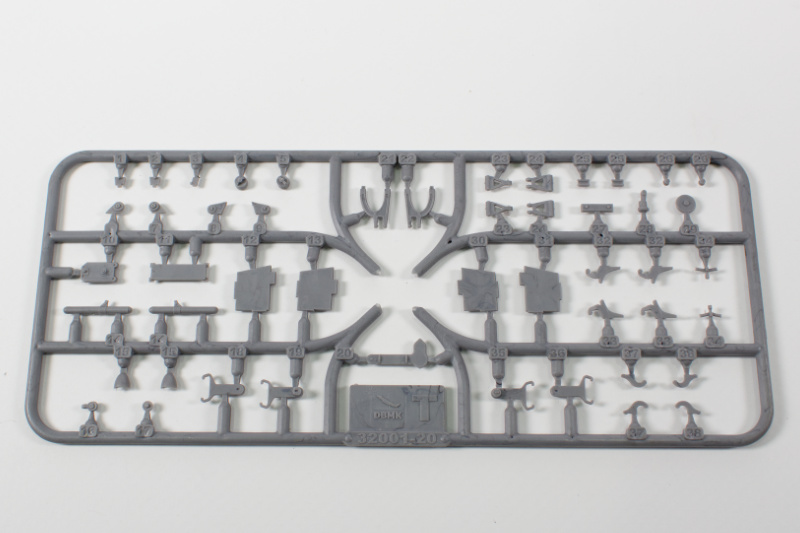
Note that alternative nose parts are included for gun and non-gun options, but in fact, neither is used in this kit, as the 'gun' part is replaced entirely by a 3D-printed part.
It's not unusual for short-run kits to exhibit flash on certain parts, and so it is with the propeller spinners in this kit:
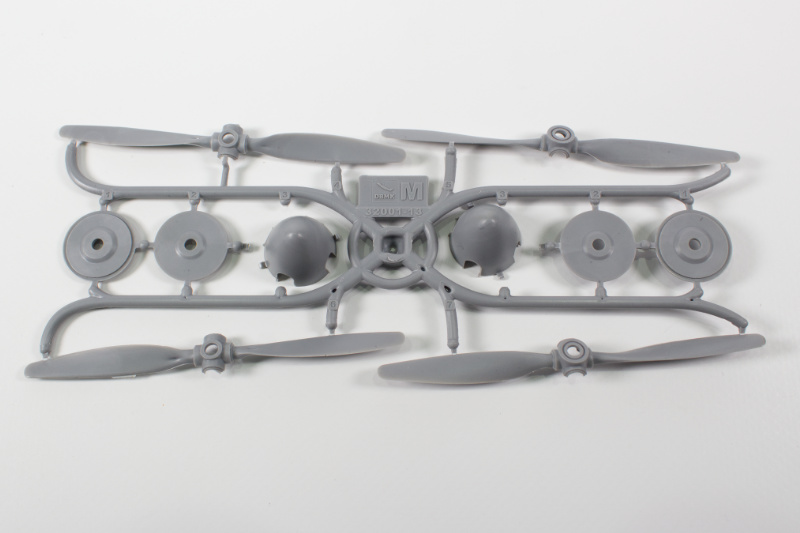
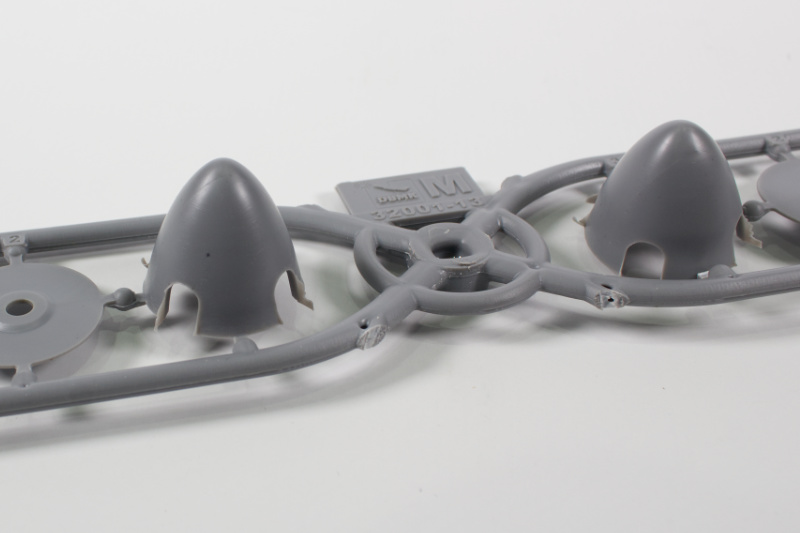
The propeller blades feature another common, though less desirable feature of limited-run kits—sink marks:
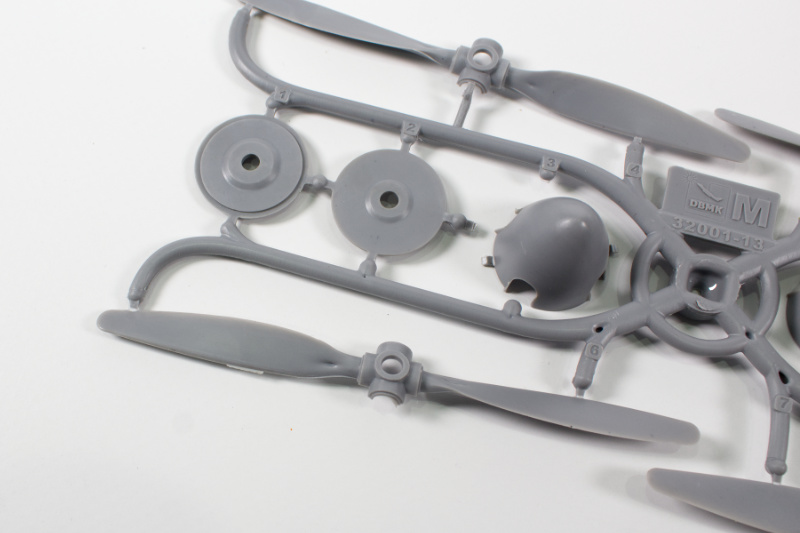
Oddly, my sample included not only a second set of spinner parts (with less flash), but also a second set of propeller blades, on a new runner (M1), and with the sink marks mostly eliminated:
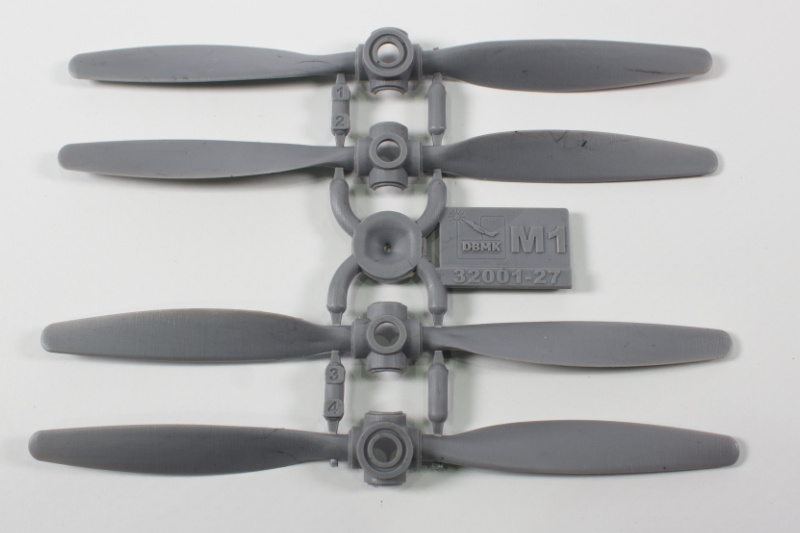
No mention is made in the instructions of alternative propellers, and since the respective parts look identical in all other ways, I can only presume that they've been produced from improved moulds designed to reduce or eliminate flash and sink marks. If so, bravo DBMK!
3D-Printed Parts
As mentioned earlier, one of the modern innovations creeping its way into the mainstream hobby is 3D printing, and while this has been a mainstay of the aftermarket industry for some years, we're now seeing the inclusion of 3D-printed parts in mainstream kits. This is especially true in short-run kits, whose detail parts were often provided as traditional cast resin pieces. 3D-printed parts offer significant advantages over this older technology, and it's a smart move on DBMK's part to supply them in this Hornet kit.
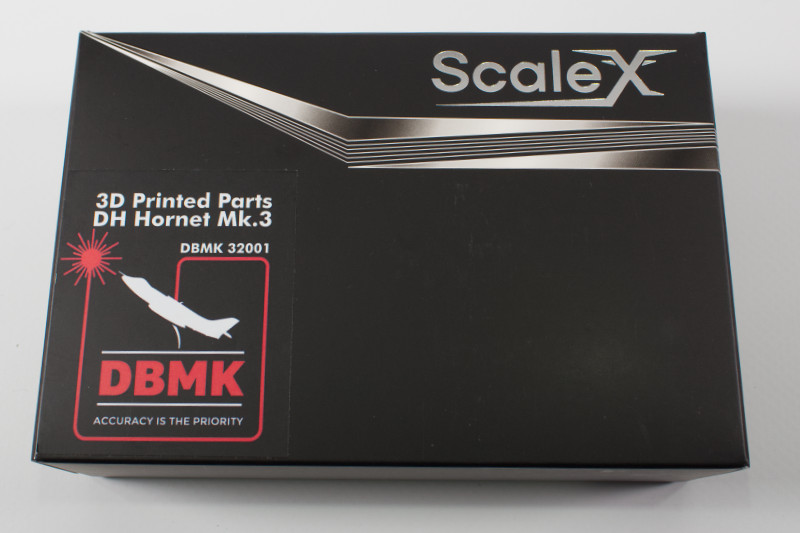
The parts themselves have been printed by ScaleX—a new firm to me—and come packaged in their own box:
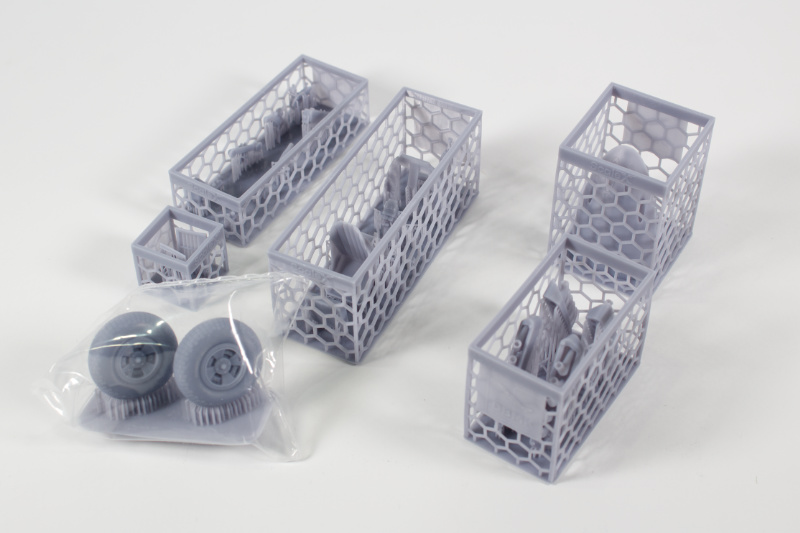
If you're not new to 3D-printed parts, you'll be familiar with the protective cages that many producers use to protect the parts during transport and handling, and so it is here. There are five of these cages in all, plus a set of wheels on their own printing raft.
The parts are difficult to photograph in situ, and removing them prematurely risks losing or damaging them, so this one photo will have to suffice in presenting just how good the printed parts are:
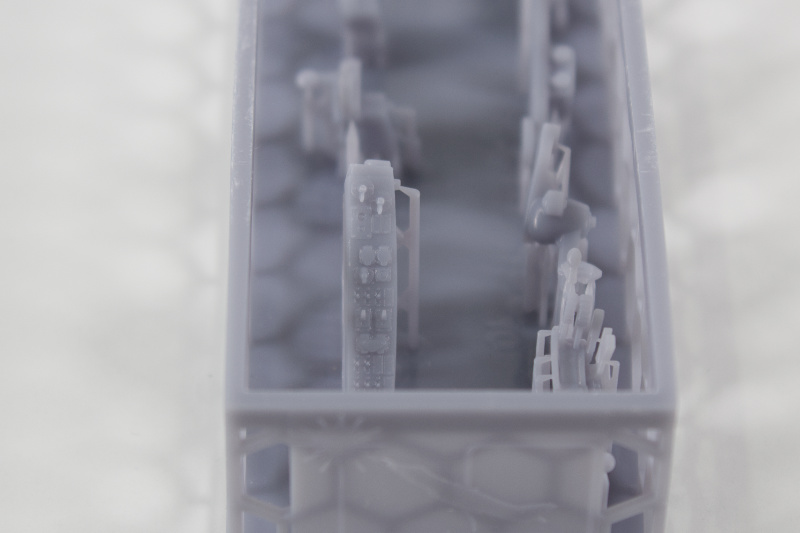
Needless to say, these parts will require careful removal and handling.
The Clear Parts
As a single-seat fighter, there are not a lot of clear parts required for this model, and they consist mostly of a windscreen and sliding canopy hood, along with various light covers.
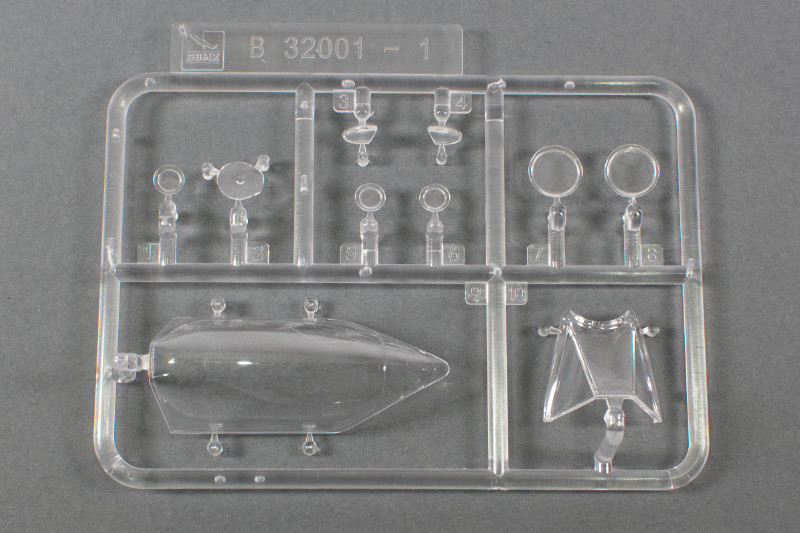
The parts a very nicely moulded, distortion-free, and so incredibly clear that the sliding hood is actually hard to distinguish in the clarity test:
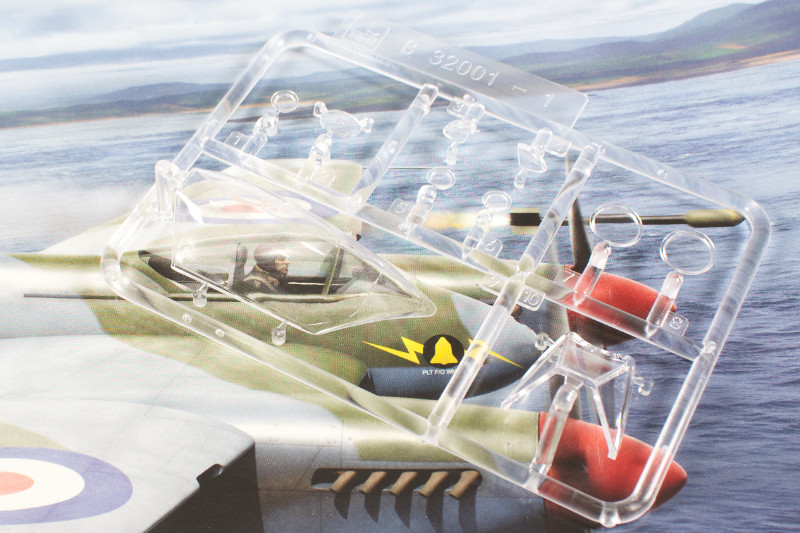
Superb! And as an added bonus, DBMK has included some pre-cut vinyl paint masks to assist with painting the canopy frames.
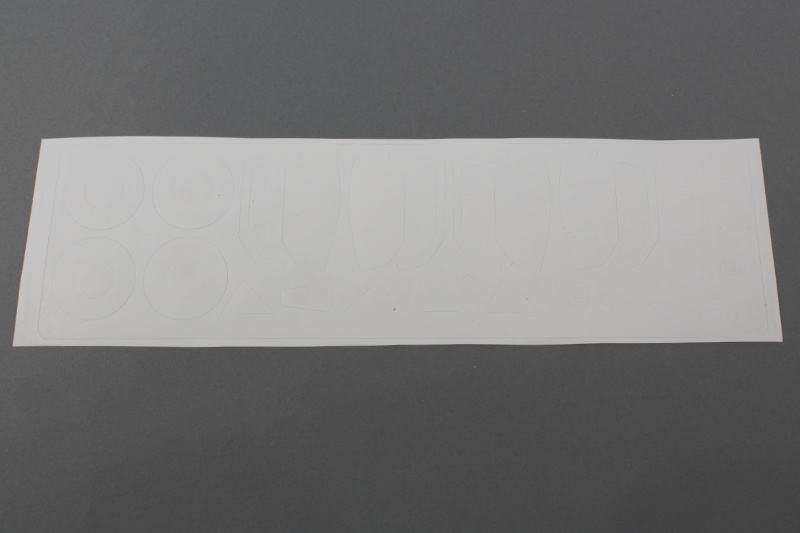
Unfortunately not much can be seen in the photo, but paint masks for the wheels and tyres are also included.
The Photo-etched Parts
The kit includes a single fret of pre-coloured photo-etch parts, manufactured by Eduard. These consist primarily of cockpit detail parts, including the instrument panel and seat belts.
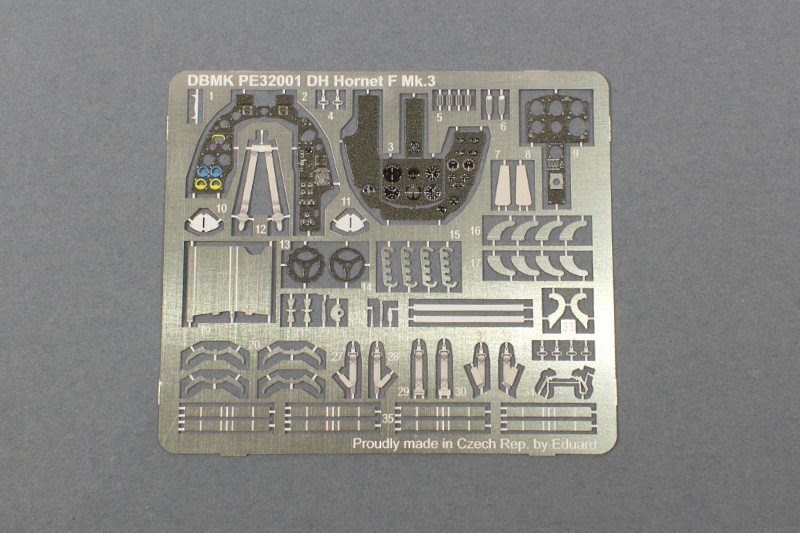
The Decals
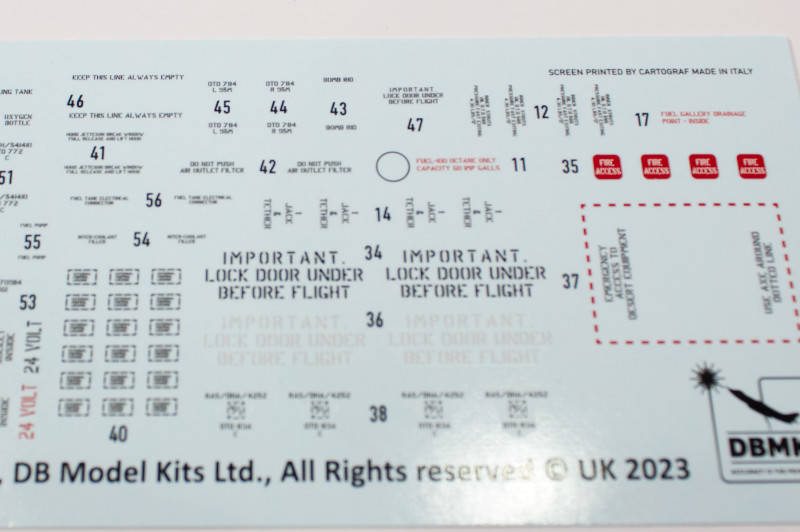
Two decal sheets are supplied in the kit. The first is a modestly-sized affair that contains all the main markings for the three schemes included, while the second, smaller sheet contains the surprisingly large number of airframe stencils.
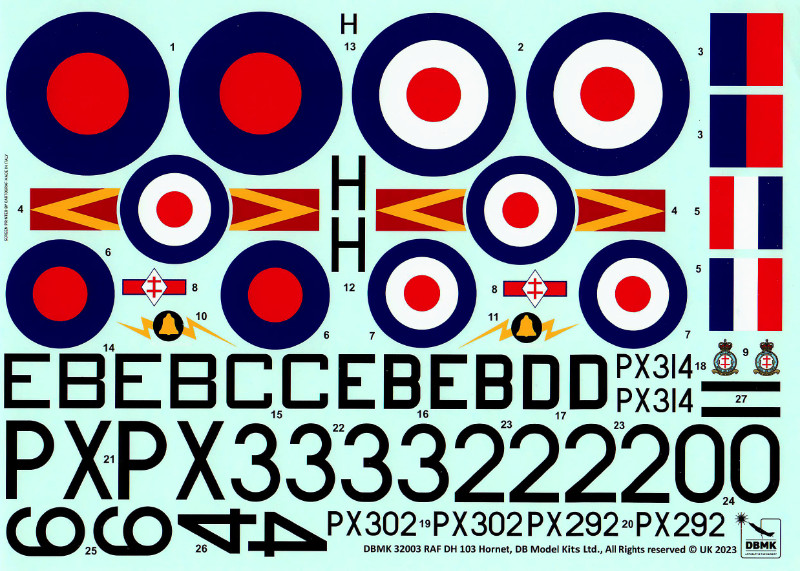
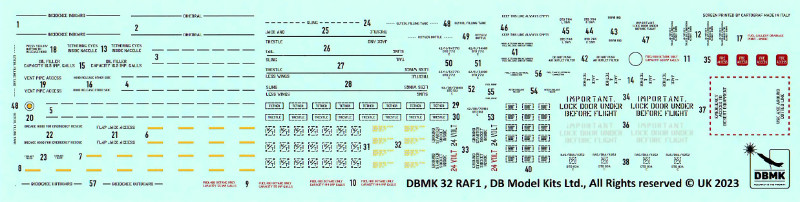
The decals are printed by Cartograf, so quality is assured, and they certainly look fantastic in person, with minimal carrier film, solid colours and perfect registration.
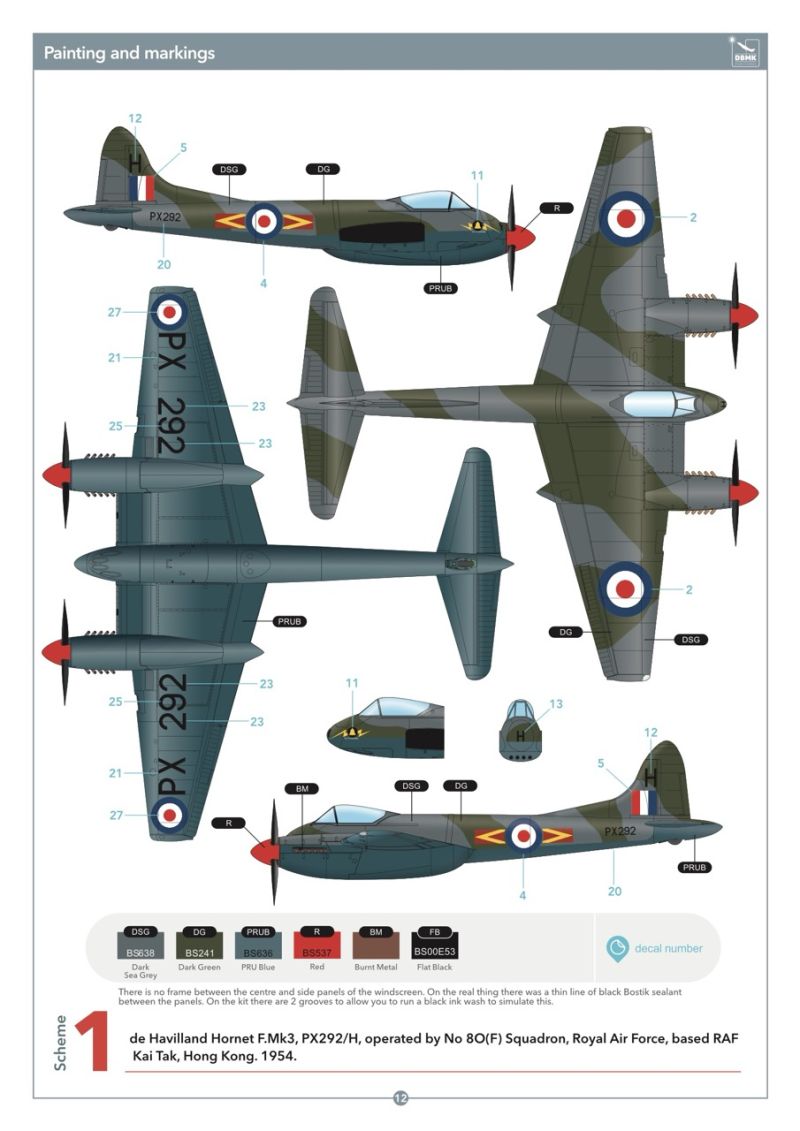
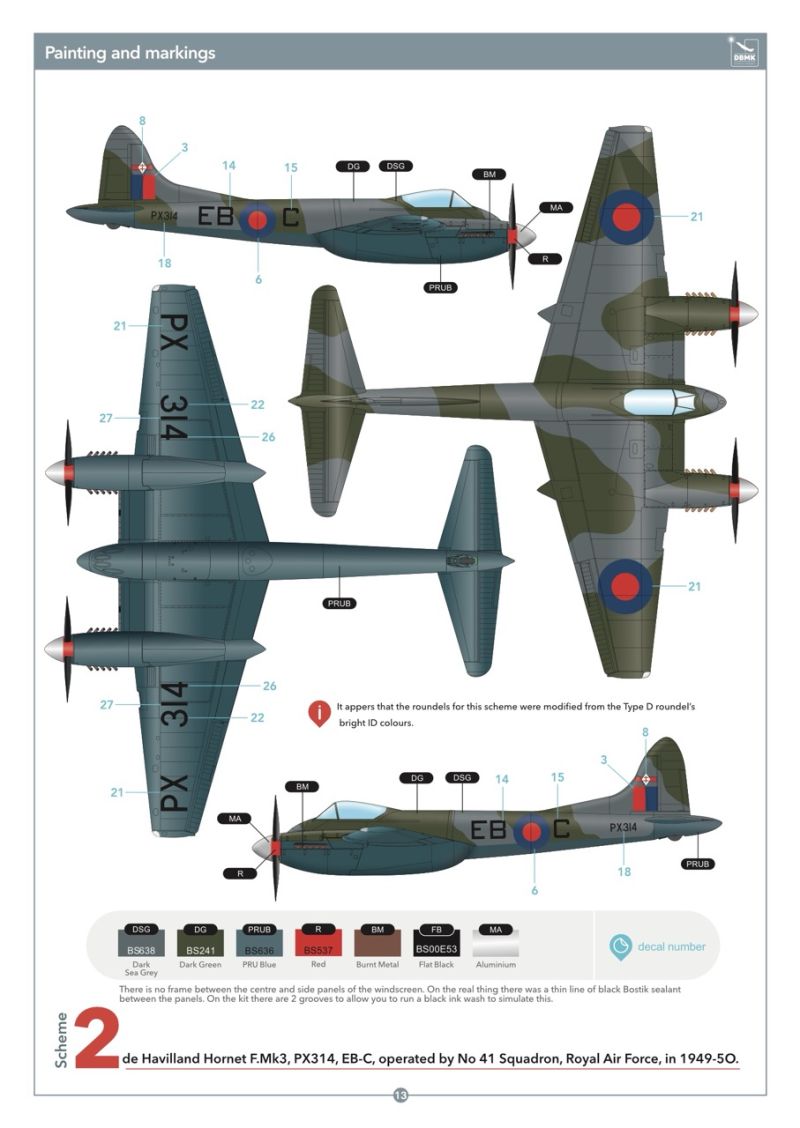
The three included schemes are as follows:
- de Havilland Hornet F.Mk3, PX292/H, operated by No 80(F) Squadron, Royal Air Force, based RAF Kai Tak, Hong Kong. 1954.
- de Havilland Hornet F.Mk3, PX314, EB-C, operated by No 41 Squadron, Royal Air Force, in 1949-50.
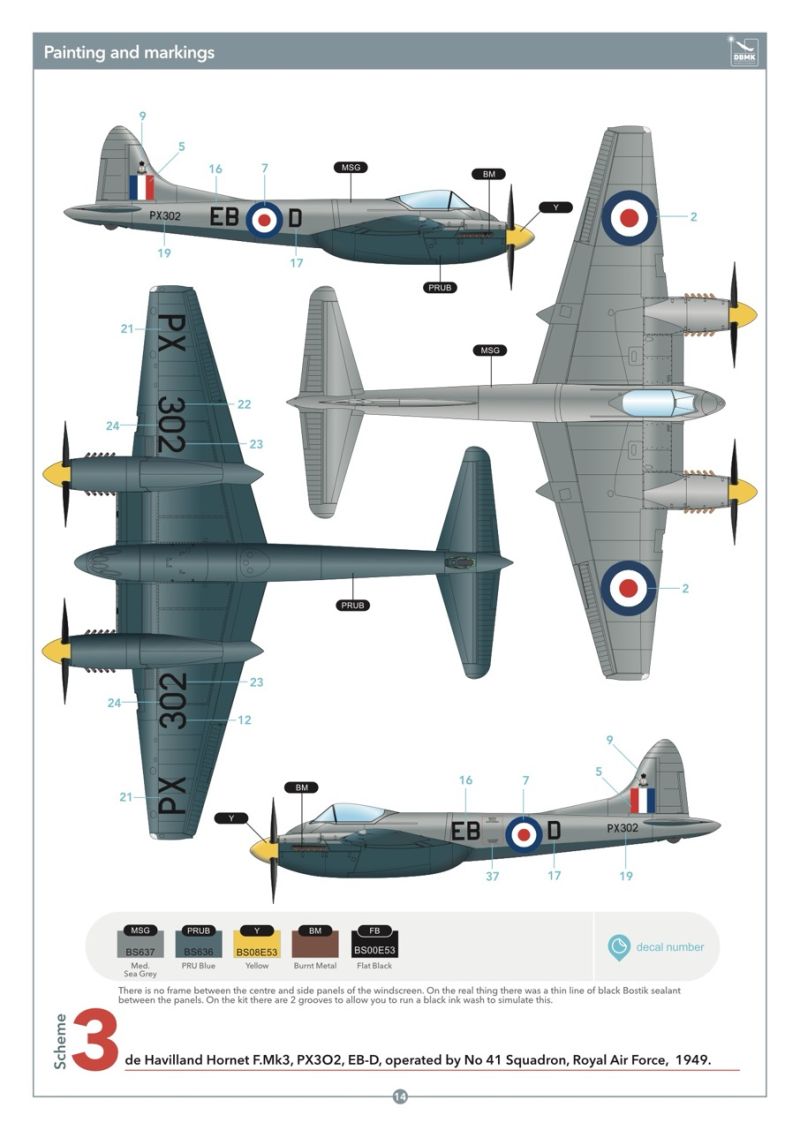
- de Havilland Hornet F.Mk3, PX302, EB-D, operated by No 41 Squadron, Royal Air Force, 1949.
The Instructions
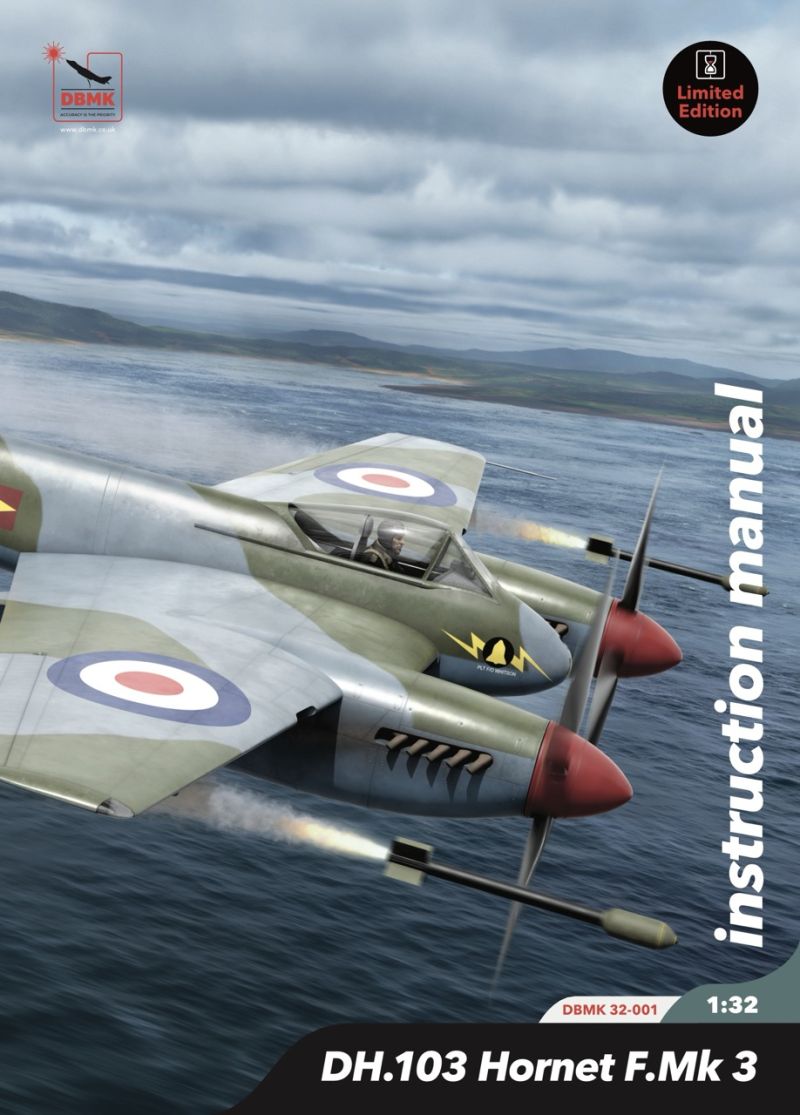
The instruction manual is a surprisingly thin A4 booklet of just 15 pages, plus front and back covers. Despite the seemingly small page count, everything is covered, from a parts diagram and legend of symbols, to a paint colour chart and full painting guides.
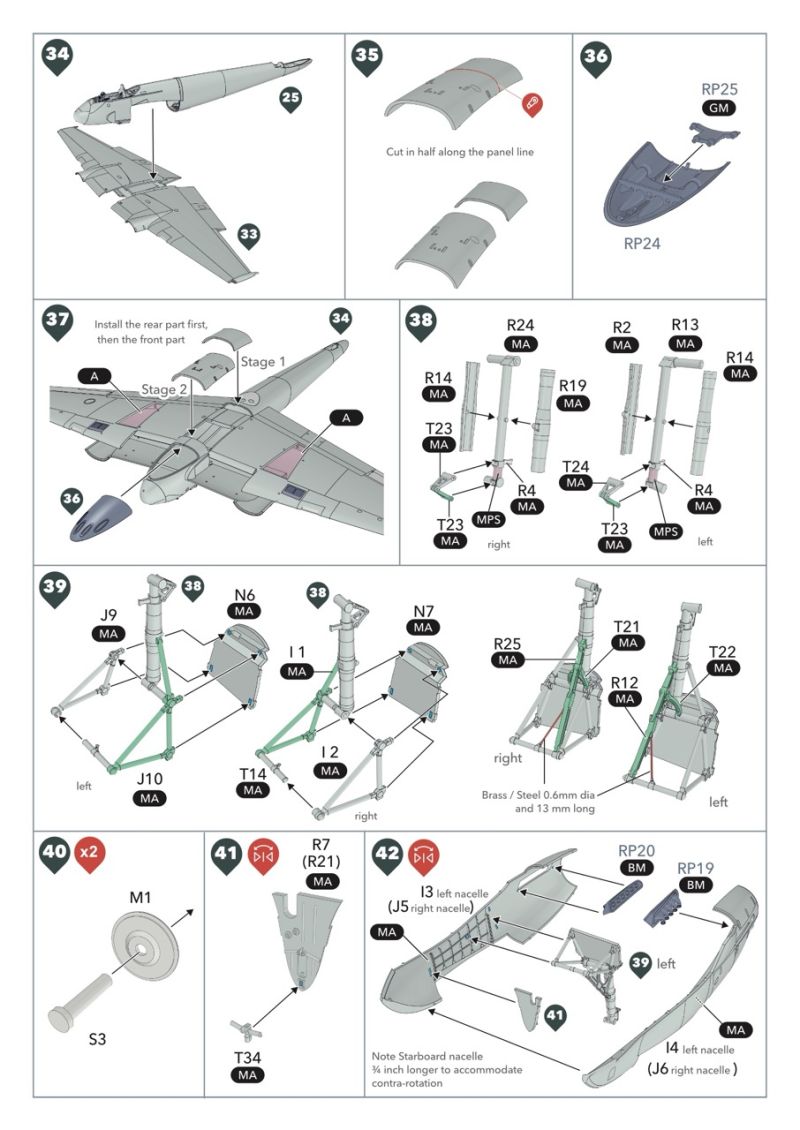
The assembly sequences are handled using the modern CAD-style take on the traditional exploded-view diagrams. They're easy to follow, show an accurate representation of the actual parts, use colour appropriately, and employ a smattering of descriptive text to help the modeller avoid unnecessary mistakes.
A bonus sheet sheet is included that contains a masking guide on one side, and a stencil placement guide on the other, which is again not only a thoughtful touch, but incredibly useful!
Conclusion
It's fair to say that I'm very impressed with this first kit from DBMK, and it's possibly one of the finest limited-run injection-moulded kits I've seen in this scale. The quality of the mouldings, the level of detail, the thoughtful engineering, and the appropriate use of multimedia materials all point to an excellent build experience.
That said, it's not possible for an in-box review to adjudicate on two of the most crucial aspects of any model kit: build-ability and accuracy. These two elements will become clear in time, but early reports from test-shot builds have been very encouraging so far, and I intend to start this one shortly.
Many thanks to DBMK for the review sample.
© Kevin Futter 2026
This review was published on Sunday, March 01 2026; Last modified on Sunday, March 01 2026