
Revell 1/32 Spitfire IXc, Converted to a IXe LF
By Suresh Nathan
Introduction
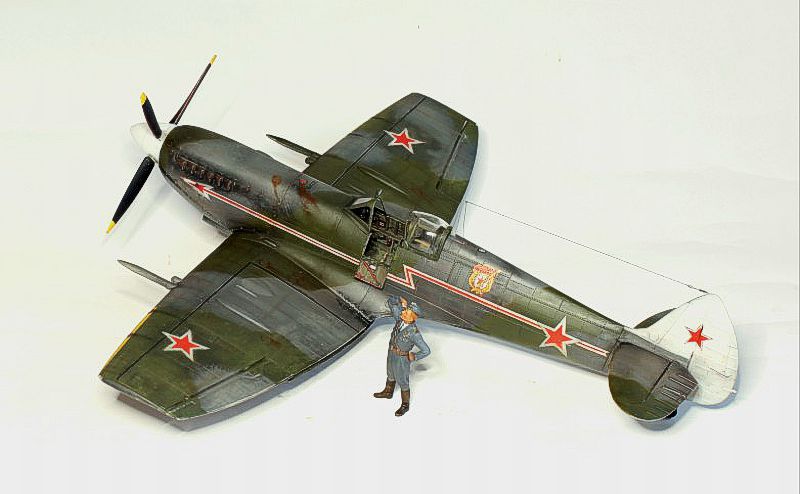
The Revell 1/32 Spitfire IXc kit served as the foundation for a historically inspired transformation: a British fighter re-purposed as a Soviet lend-lease aircraft from World War II. This build pays homage to the lesser-known chapter of Allied cooperation, where Spitfires flew under the red star.
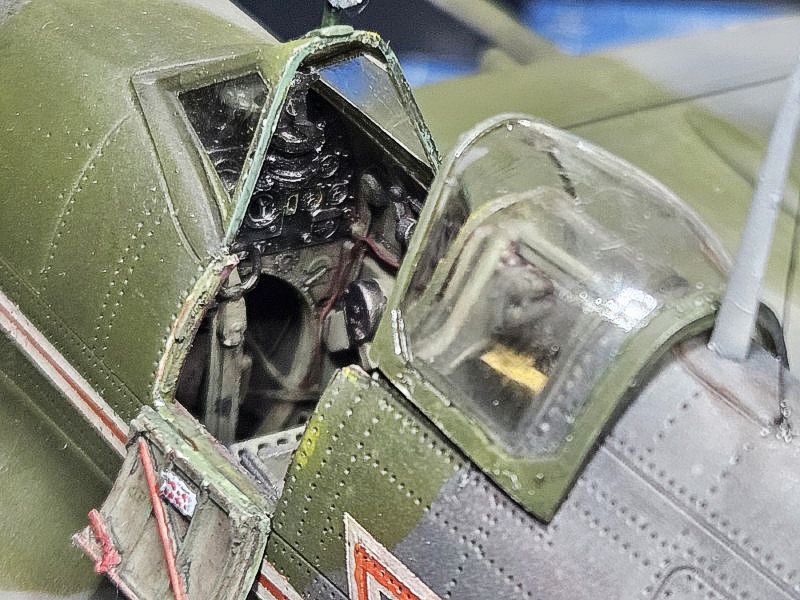
Cockpit Detailing and Interior Assembly
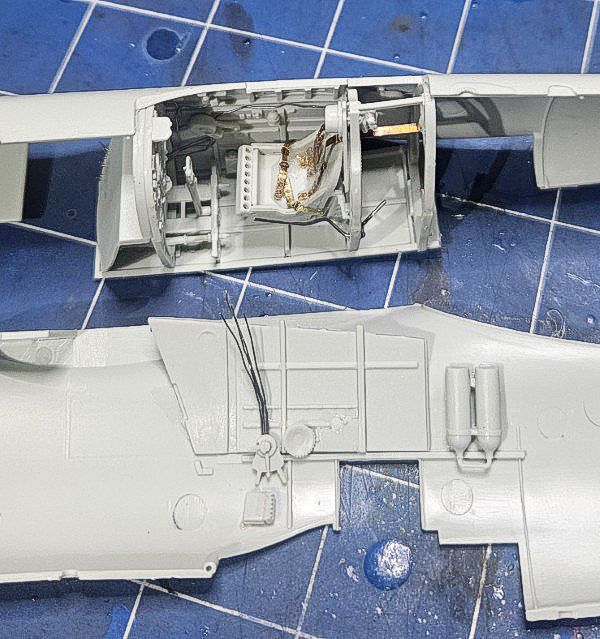
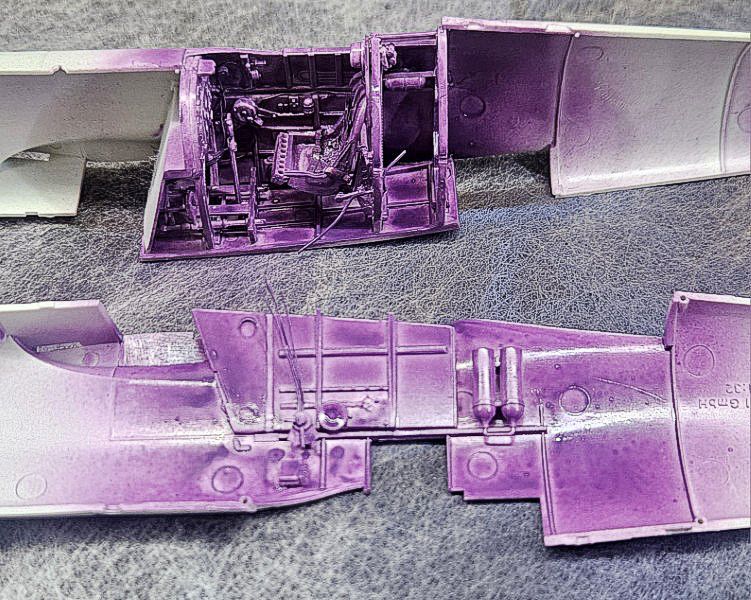
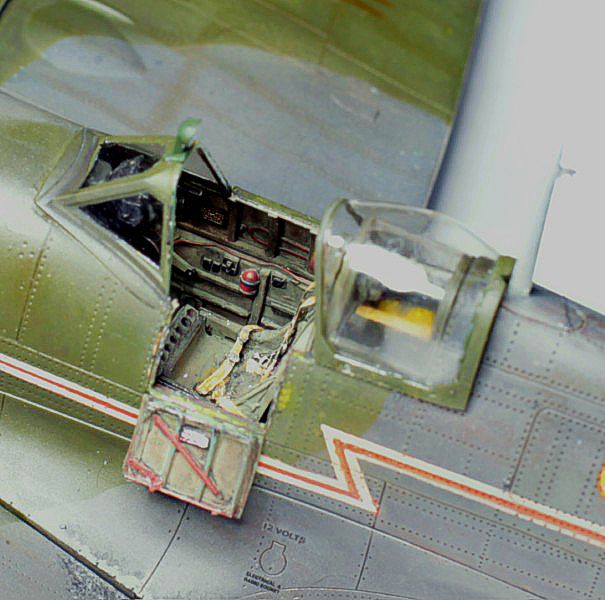
The journey began with meticulous cockpit construction. Early images show the fuselage halves laid out, with the pilot’s seat, control stick, and internal wiring carefully installed. The cockpit was painted in a custom mix of purples and greens to simulate wear and Soviet field modifications. Wiring and tubing were added to enhance realism, and the instrument panel received fine detailing with dry brushing and decals.
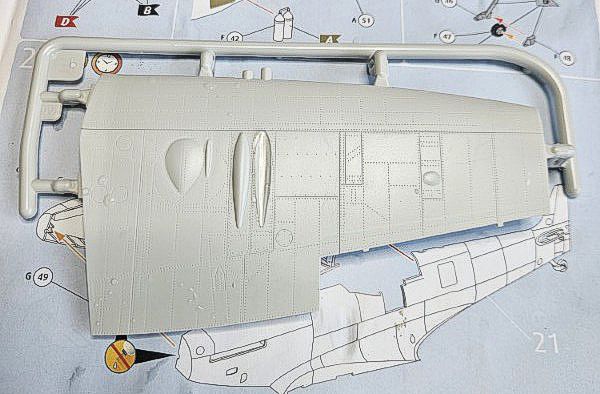
Structural Modifications
To convert the IXc to the IXe LF variant, the gun blisters were repositioned to reflect the aircraft’s lighter armament and clipped wings. This required making a surface mould of the kit blisters and sanding down the original blisters. The wing sections, still on sprue, were test-fitted and aligned using the instruction manual as a guide, ensuring accuracy in blister placement and internal structure.
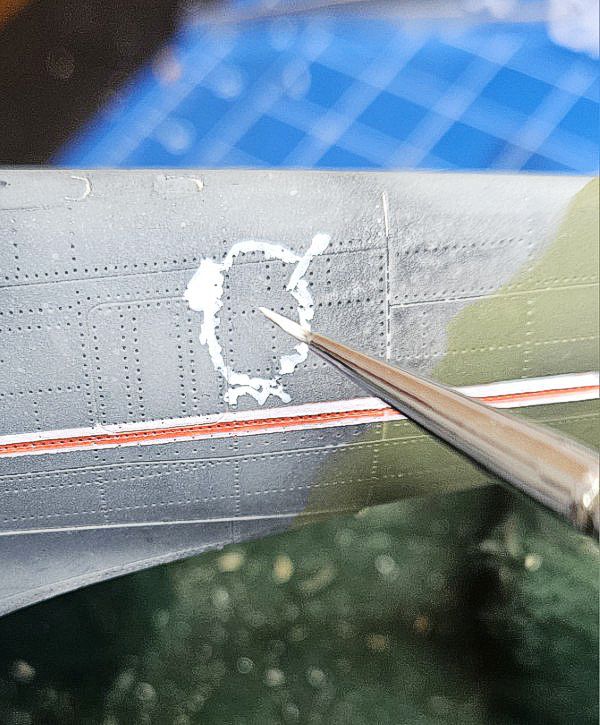
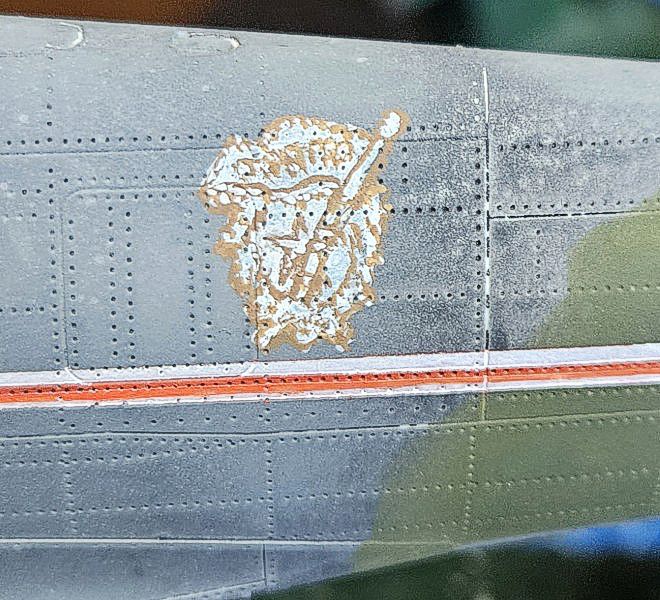
Exterior Painting and Markings
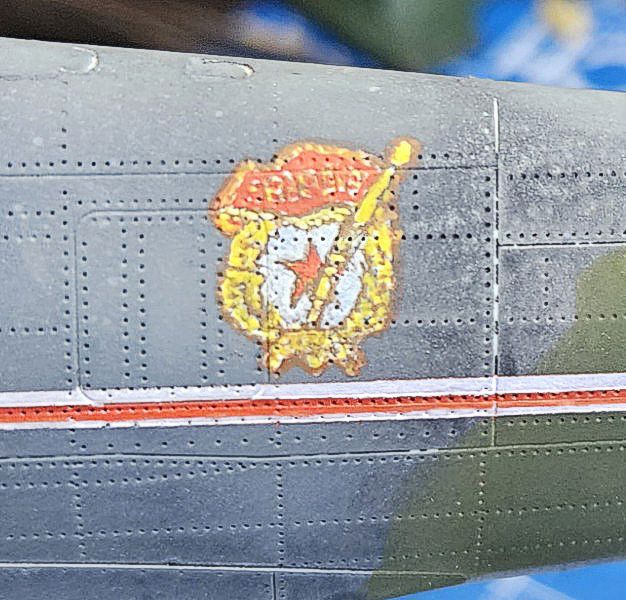
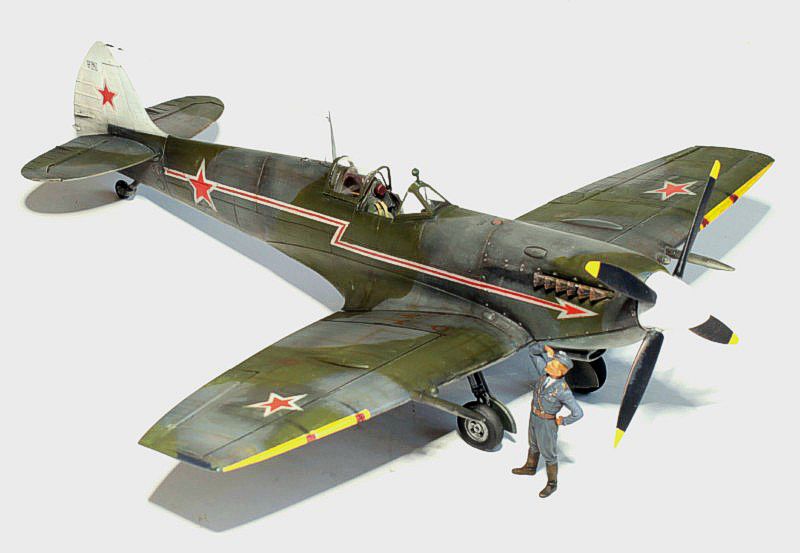
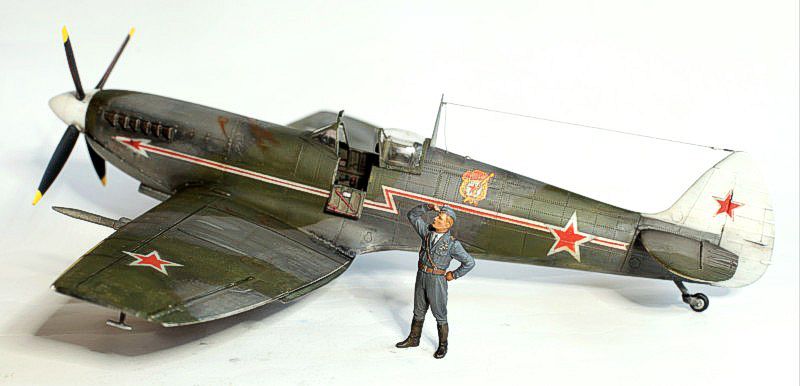
The fuselage was primed and painted in a layered camouflage scheme of dark green and gray. A red and white stripe was added along the fuselage to echo Soviet field markings. The painting process for the Soviet Guards badge was captured mid-stroke, with a fine brush applying white highlights to insignia areas. Weathering effects—exhaust stains, chipped paint, and panel line washes—were applied to simulate combat wear.
Soviet Identity and Final Touches
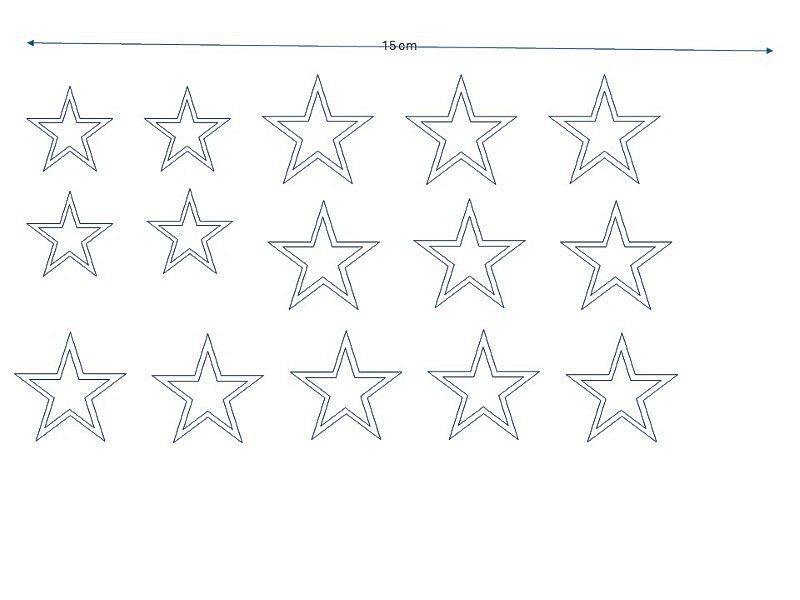
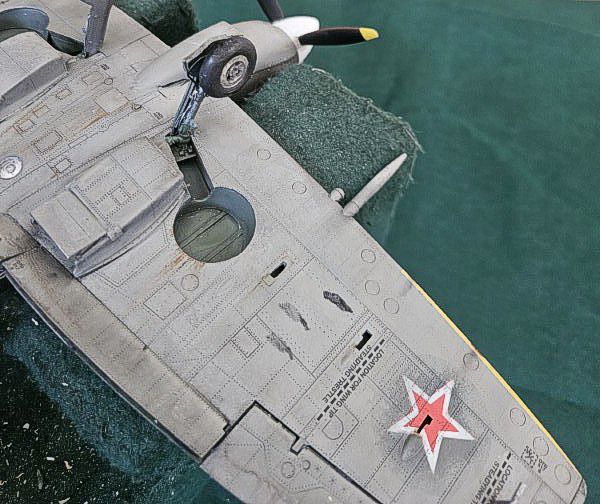
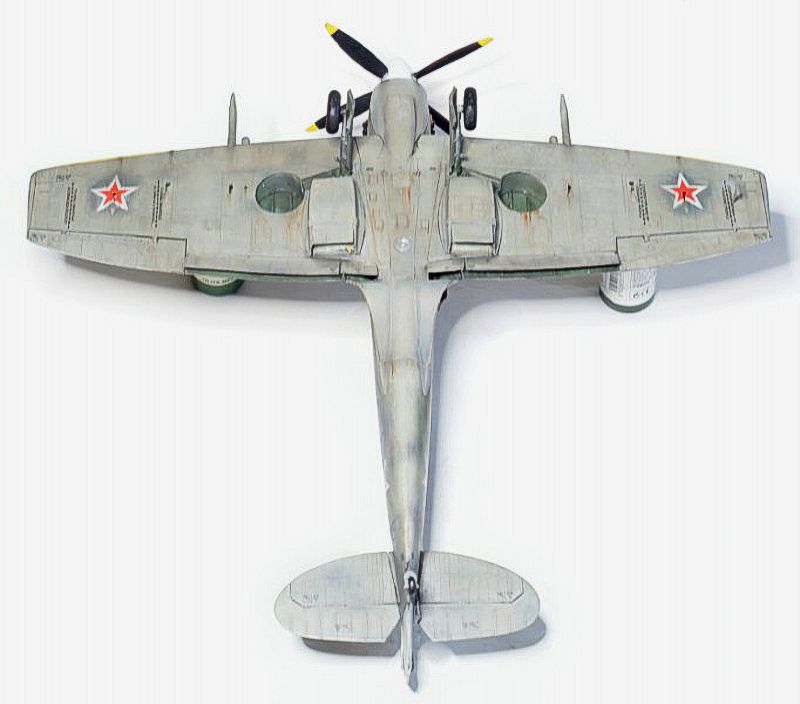
Masks were customized to reflect Soviet service: red stars on wings and tail, a lightning bolt emblem, and Cyrillic stencils. The underside reveals stencilled warnings and a red star, reinforcing the aircraft’s Soviet identity but with English roots. Note the effect of the roundels having been sanded down and the red star painted over it.
Display and Historical Context
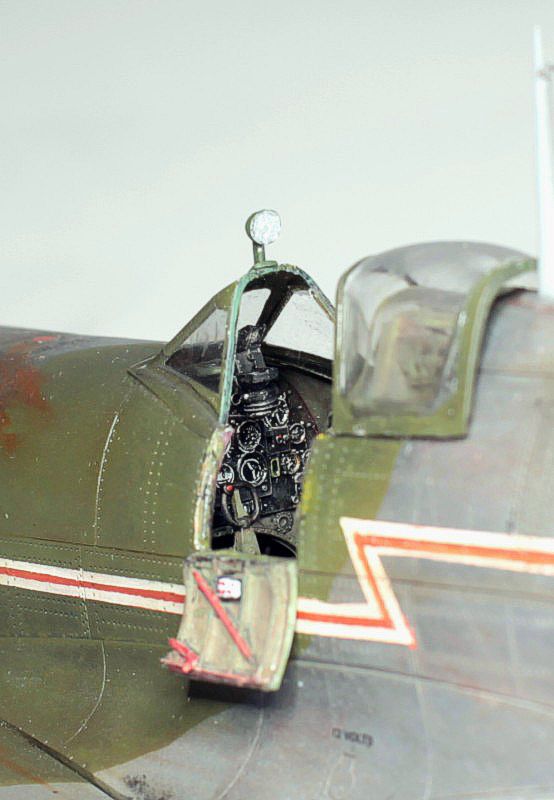
The final model, posed with a miniature Soviet pilot figure, evokes the spirit of wartime adaptation. The open canopy and detailed cockpit invite viewers to appreciate the craftsmanship and historical nuance. This build not only showcases technical skill but also tells a story—of collaboration, adaptation, and the global reach of the Spitfire legacy.
© Suresh Nathan 2025
This article was published on Wednesday, December 03 2025; Last modified on Sunday, December 07 2025